

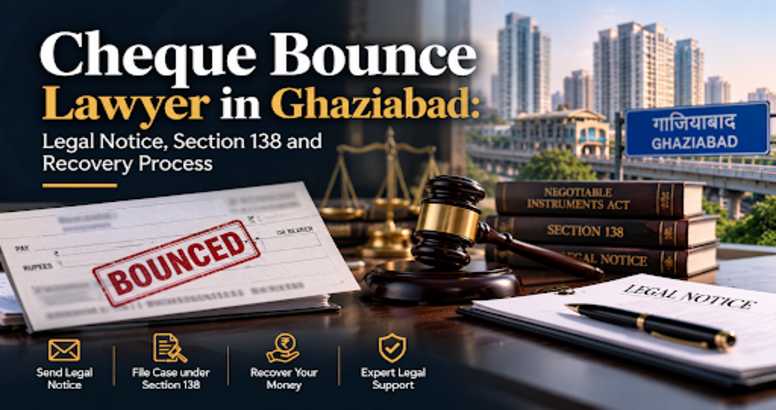
A cheque is commonly used for business payments, personal transactions, loans and other financial obligations. However, when a cheque is returned unpaid by the bank, it can create financial difficulties and disputes between the parties. The person expecting payment may face delays in recovering money, while the person who issued the cheque may need to understand their legal rights and responsibilities.
If you are dealing with a dishonoured cheque, consulting a cheque bounce lawyer in Ghaziabad can help you understand the applicable law, important deadlines and available legal remedies.
In India, Section 138 of the Negotiable Instruments Act, 1881, deals with certain cases of cheque dishonour involving a legally enforceable debt or liability. However, not every bounced cheque automatically results in liability under this provision. The statutory requirements and circumstances of the transaction must be examined carefully.
What Is a Cheque Bounce Case?
A cheque bounce occurs when a bank returns a cheque without making the payment. One possible reason is insufficient funds in the account. Other reasons may also be recorded by the bank, depending on the circumstances.
Section 138 may apply where a cheque is issued towards the discharge, wholly or partly, of a legally enforceable debt or liability and the relevant statutory conditions are satisfied.
For example, a business supplies goods to a customer, and the customer issues a cheque towards payment of the outstanding invoice. If the cheque is dishonoured for insufficient funds, the supplier may have a remedy under Section 138, provided the legal requirements are fulfilled.
The actual outcome depends on the transaction, the reason for dishonour, the supporting documents and the applicable law.
Common Reasons for Cheque Dishonour
| Reason | Explanation | What to review |
| Insufficient funds | The account does not contain sufficient funds to honour the cheque | Bank return memo and account-related records |
| Payment stopped | The drawer has instructed the bank not to make payment | Reason for the instruction and underlying transaction |
| Signature discrepancy | The signature does not match the bank’s records | Cheque details and relevant banking information |
| Account-related issue | The account is closed or has another issue affecting payment | Bank memo and circumstances of issuance |
| Other technical reasons | The cheque is returned due to a banking or instrument-related issue | The specific reason recorded by the bank |
The legal consequences vary by reason. A lawyer should examine the bank return memo and facts before determining whether Section 138 or another remedy may apply.
What Is Section 138 of the Negotiable Instruments Act?
Section 138 establishes a legal framework for specified instances of cheque dishonour. It generally requires that the cheque was issued towards a legally enforceable debt or liability, was presented within its validity period, and was dishonoured under circumstances covered by the provision.
The payee or holder in due course must also comply with the statutory demand-notice requirements and applicable deadlines.
A cheque bounce advocate in Ghaziabad can help review the cheque, underlying transaction, bank records and notice requirements to determine the appropriate next step.
Important Deadlines in a Cheque Bounce Case
Meeting statutory deadlines is one of the most important aspects of a cheque bounce matter.
| Stage | General statutory requirement |
| Cheque presentation | Present the cheque within its validity period; cheques are generally valid for three months from the date of issue |
| Bank dishonour information | Obtain and preserve the bank return memo and record when the dishonour information was received |
| Legal demand notice | Generally, issue the written demand notice within 30 days of receiving information from the bank about dishonour |
| Payment opportunity | The drawer generally has 15 days from receipt of the demand notice to pay the cheque amount |
| Filing a complaint | If the statutory conditions are met and payment is not made, the complaint generally must be filed within one month after the cause of action arises, subject to the statutory provisions concerning delay |
These time limits are important and must be calculated according to the actual dates and applicable law. The exact facts, service of notice and statutory exceptions can affect the legal position. Obtain legal advice promptly rather than relying solely on a general timeline.
Step-by-Step Procedure for a Cheque Bounce Case
1. Collect the cheque and bank return memo
Keep the original cheque, where available, and the bank’s return memo. The memo helps establish the reason the cheque was dishonoured.
2. Review the underlying transaction
Collect invoices, agreements, loan records, account statements, delivery receipts or correspondence that may establish the debt or liability for which the cheque was issued.
3. Send the statutory demand notice
Where Section 138 applies, the payee or holder in due course generally needs to send a written demand notice within the prescribed 30-day period after receiving information about dishonour.
The notice should be drafted carefully to reflect the transaction, cheque details and applicable legal requirements.
4. Allow the prescribed payment period
The drawer generally has 15 days from receipt of the notice to make payment of the cheque amount. Preserve the notice, dispatch records, delivery proof and any reply received.
5. Assess whether a complaint should be filed
If payment is not made within the statutory period and the other requirements are satisfied, a lawyer can assess the filing of a complaint before the competent court within the applicable limitation period.
6. Participate in the legal proceedings
The parties may need to attend court proceedings and produce relevant documents or evidence. The procedure and possible outcome depend on the facts and applicable law.
Documents Required for a Cheque Bounce Case
| Document | Why it is important |
| Original cheque or available copy | Identifies the instrument and cheque details |
| Bank return memo | Records the reason for dishonour |
| Invoice or agreement | Helps establish the underlying transaction |
| Loan or payment records | May support the claimed debt or liability |
| Legal demand notice | Documents the formal payment demand |
| Postal receipt and delivery proof | Helps establish dispatch and service |
| Correspondence between parties | May clarify the transaction or any dispute |
The documents required may differ depending on whether you are filing a complaint or responding to a legal notice.
What Should You Do If You Receive a Cheque Bounce Legal Notice?
Receiving a legal notice should not be ignored. Review the cheque details, amount demanded, transaction history and dates carefully.
If you believe the amount has already been paid or the transaction is disputed, preserve supporting records such as bank statements, receipts, agreements and relevant communications. Consult a lawyer to understand your legal position and whether a response is appropriate.
Do not fabricate documents or make unsupported claims. A fact-based assessment can help identify the available legal options.
Why Consult a Cheque Bounce Lawyer in Ghaziabad?
Cheque dishonour cases involve specific legal requirements and strict deadlines. Errors in calculating limitation periods, preparing notices or maintaining documentary evidence can complicate proceedings.
A cheque bounce lawyer can review the transaction, explain the applicable law, advise on notice requirements and help prepare or respond to legal proceedings where appropriate.
S&K Legal Advisory provides legal assistance in cheque bounce matters and related disputes. The appropriate legal strategy depends on the transaction, evidence and procedural stage.
Frequently Asked Questions (FAQs)
1. Which law applies to cheque bounce cases in India?
Section 138 of the Negotiable Instruments Act, 1881, addresses specified cases of cheque dishonour involving a legally enforceable debt or liability, subject to statutory requirements.
2. How many days do I have to send a cheque bounce notice?
Generally, the written demand notice must be issued within 30 days of receiving information from the bank that the cheque has been dishonoured.
3. How long does the drawer have to pay after receiving the notice?
The drawer generally has 15 days from receipt of the statutory demand notice to pay the cheque amount.
4. Can I file a cheque bounce case if the other party refuses to pay?
A complaint may be possible if the requirements of Section 138 are satisfied and payment is not made within the prescribed period. The facts and documents should be reviewed by a lawyer before taking action.
5. Can a cheque bounce case be settled?
Settlement may be possible depending on the circumstances and stage of the proceedings. Any settlement should clearly record the agreed terms and address the pending legal process appropriately.
6. What should I do if I receive a cheque bounce notice?
Review the notice and relevant transaction records promptly, preserve evidence of any payment or dispute, and consult a qualified lawyer about the appropriate response.
7. Why should I consult a cheque bounce lawyer in Ghaziabad?
A lawyer can help you understand the statutory deadlines, review documentary evidence, prepare appropriate notices and assess the legal remedies available in your circumstances.
Conclusion
Cheque dishonour can create serious financial and legal concerns for individuals and businesses. Understanding Section 138, preserving relevant documents and complying with statutory deadlines are important steps when dealing with a cheque bounce dispute.
If you are looking for a cheque bounce lawyer in Ghaziabad, S&K Legal Advisory can help you discuss your legal concerns and understand the options that may be available under the applicable law.
